Trump Announces Cancellation of Iran Strikes Pending Rapid Deal
Cancelling the Strike Is the First Service a Commercial Republic Owes Itself
When a state "locked and loaded" chooses a rapid bargain over a rapid bombardment, it serves both justice and the natural progress of opulence—if it can master its own love of theatrical terror.
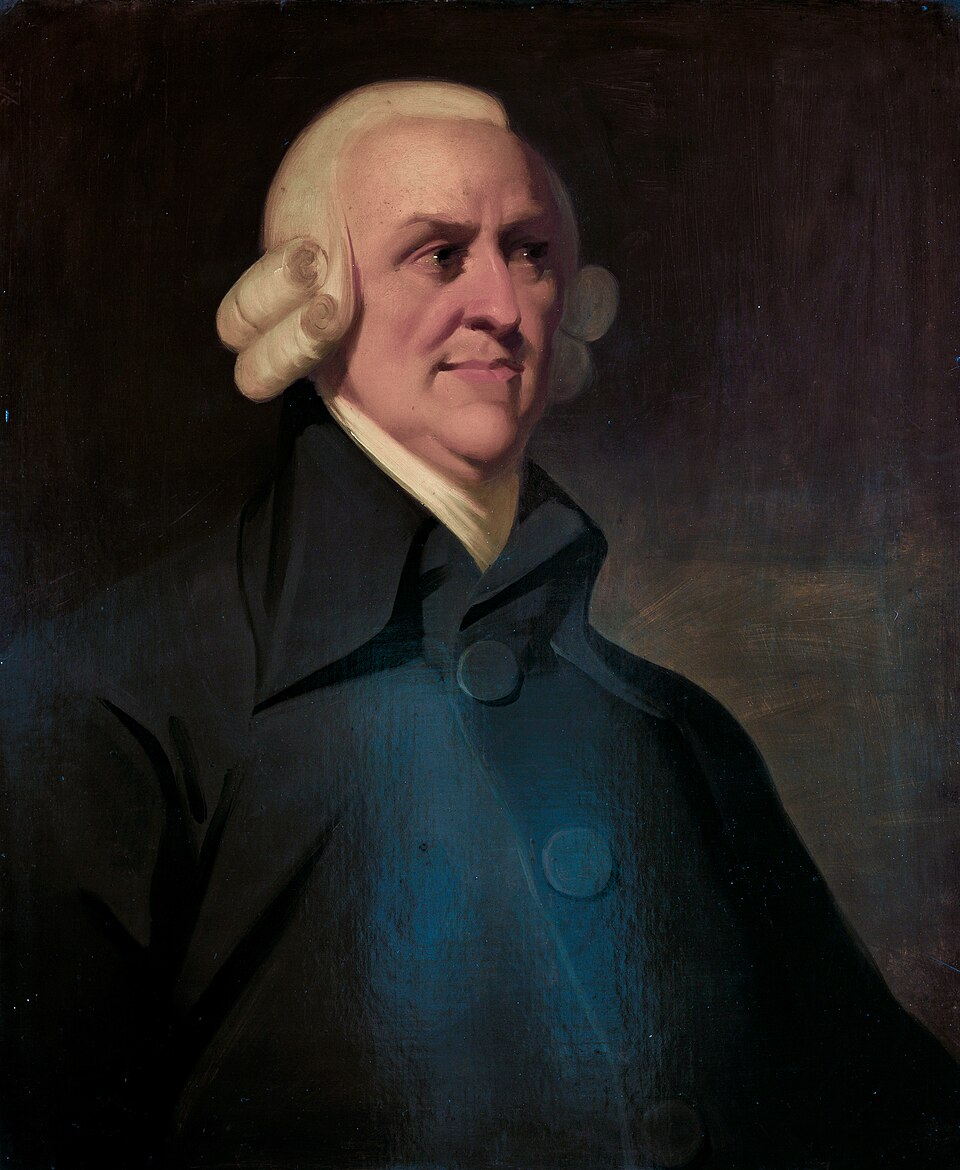
The spectacle is almost too frank. A president announces that his country is “locked and loaded and ready to go” against another; he invokes “Military Terror, Strength, and Power not seen since World War II”; and then, in the same breath, proclaims that he has cancelled the attack, “subject to being able to rapidly make a DEAL.” The adversary’s government, neighbouring states, even a long-time regional antagonist, are all said to have requested this pause. The exchange is conducted, not by secret dispatch, but upon a public stage of “posts,” likes, and outrages. It is war-making as advertisement, and yet, for all its theatricality, the core decision is of the most ancient and serious kind: to strike, or to hold the hand.
In the work I called *The Wealth of Nations*, I assigned to the sovereign three chief duties: the defence of society, the administration of justice, and certain public works which private interest would not supply. Defence is not ornament; it is a necessary charge of government, and the right to use force against external enemies is inseparable from it. That a great republic should prepare its arms, and even display them, is therefore no usurpation. The question is not whether it may be “locked and loaded,” but when it is morally permitted to discharge that power, and when restraint better serves both justice and security.
Here, restraint was chosen in order to pursue a rapid accommodation, said to include the open passage of a narrow sea and assurances respecting weapons of dreadful potential. I am struck that the prince of a neighbouring monarchy urges “dialogue to de-escalate tensions” and a truce to prevent a wider conflagration; that other governments in the region, including one ordinarily counted an enemy to Tehran, request delay; that a majority of the republic’s own citizens reportedly disapprove the war that looms in the background. In *The Theory of Moral Sentiments* I proposed an impartial spectator, who views our conduct from a distance: to him, the preference for negotiation over immediate carnage must appear at least presumptively decent.
Though my own age knew nothing of nuclear engines nor of these immense steel ships that choke or free the Strait of Hormuz, we understood straits and blockades well enough. The division of labour, whose power I illustrated with my little example of the pin manufactory, is everywhere limited by the extent of the market. A narrow channel that carries the industry of many nations is therefore a kind of artificial market-maker: to close it is to contract the sphere of exchange; to open it fully is to expand commerce for all bordering peoples. A bargain that promises the “immediate, complete, and total opening” of such a passage, if sincere, promises as well to enrich the labouring poor from Glasgow to the Gulf.
War, by contrast, presents the oldest of political illusions: benefits concentrated, costs dispersed. The gains are visible and loudly praised—the contracts of the armourer, the promotion of the officer, the grim satisfactions of injured pride. The losses are borne in small, silent fractions: in dearer fuel, in interrupted trade, in the uncertainty that checks the merchant’s hand and dismisses the common workman. Even the distant consumer, far from the first explosion, pays a little more for his bread and carriage, and never quite knows to whom he should address his complaint. The man who plays with “Military Terror” thus wagers with other people’s money and, what is worse, with other people’s lives.
I have long counselled that the petitions of merchants be heard with the most suspicious attention. When men who trade in arms, shipping, or security urge their government toward conflict, they seldom confess how much they stand to gain from hazard and alarm. People of the same trade, even in peace, are apt to conspire against the public; they are not likely to grow more disinterested when war premiums swell their profits. In the present case, we are told only of rulers and not of their commercial counsellors; but that a planned strike is suspended at the request of several governments, and in the face of a populace weary of war, suggests that, for once, the counsels of the counting-house have not wholly prevailed.
Yet I am not so simple as to imagine that a single “DEAL,” rapidly struck under the shadow of threats, can remake the great chess-board of human society according to any statesman’s design. The actors in this drama—Iranian, American, Arab, and Israeli—each move according to their own fears, prejudices, and hopes, not as mere pieces awaiting the president’s hand. A bargain enforced only by temporary terror will prove as fleeting as the passion that produced it. What commends the present pause is not that it perfects the system of the world, but that it buys time for humbler, more durable arrangements: dull embassies, regular commerce, mutual habits of interest, which, in the end, do more to secure peace than all the posts about strength and power not seen in generations.
If, therefore, the choice is between an immediate display of “Military Terror” and a rapid negotiation that keeps the strait open, restrains new engines of destruction, and gives the labouring poor one more day in which to ply their trades without interruption, the impartial spectator within my own breast cannot hesitate. He applauds the self-command that cancels the strike, even when vanity would have delighted in the explosion. Whether this prudent impulse can withstand the next provocation, and whether the promised bargain is more than a theatrical flourish, are questions only future conduct can answer; but a great commercial republic does well, on any day it can, to choose markets over missiles.
From the works cited
- An Inquiry into the Nature and Causes of the Wealth of Nations — The division of labour (the pin factory) as the engine of opulence, limited by the extent of the market.
- An Inquiry into the Nature and Causes of the Wealth of Nations — The sovereign's three duties (defence, justice, public works and institutions) and the four maxims of taxation.
- The Theory of Moral Sentiments — Judge conduct by the impartial spectator: what would a well-informed, disinterested observer feel about this action?