US-South Korea Military Exercises Proceed Amid Disagreements Over Iran and War Games
Coercing Allies Is Not Governance but Usurpation
When a ruler demands warlike help from free nations and couples the demand with threats, he ceases to act as a magistrate and begins to play the tyrant—and refusal becomes a duty, not an affront.
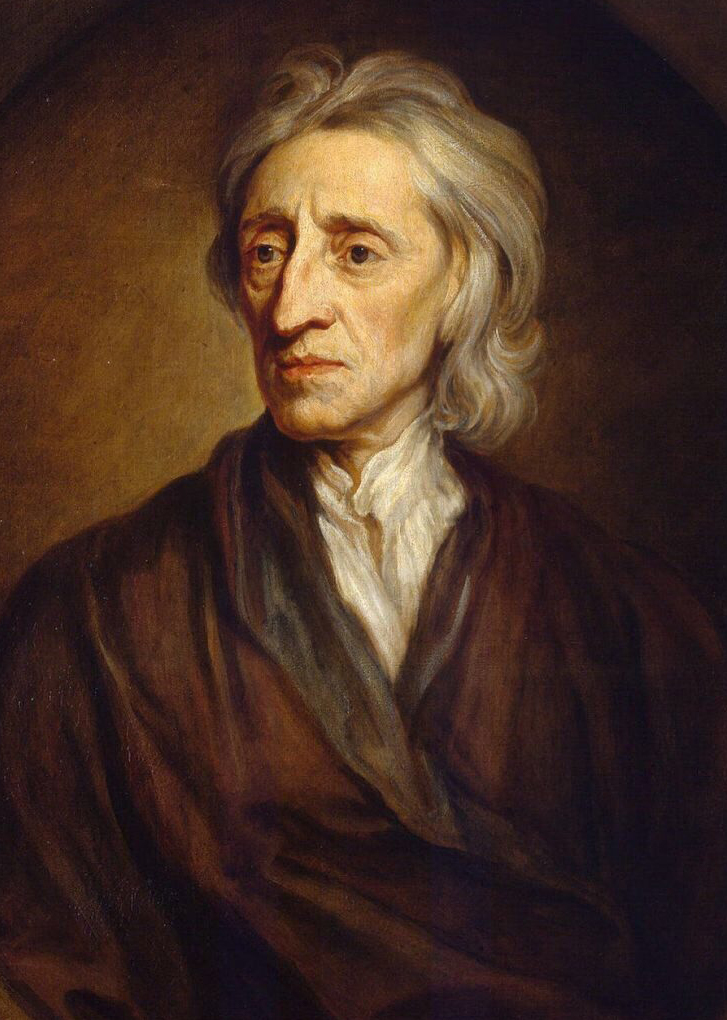
A president of a great republic tells the world that he asked the president of South Korea to join him in what he calls the “Denuclearization of the Islamic Republic of Iran,” and received the answer, “No thanks.” In the same season he complains that joint military exercises with South Korea are “unnecessarily provocative” to a neighbouring ruler, and demands that these exercises be scaled back. Yet South Korea’s defense ministry calmly announces that the exercises have begun as planned, and its president speaks of “maintained close coordination” and a resolve to continue it. I meet here, in compact form, the whole question of political power: who may command, upon what grounds, and how far.
The matter is sharpened by his reported words about another state, Oman. Speaking of that country’s dealings with Iran, he is said to have remarked that if Oman “gets in the way,” his government will “bomb” it in coarse and threatening terms. Here we have, if truly reported, not the sober language of treaty and law, but the language of a man already persuaded that his will is measure enough. I am struck not by the novelty of such talk, but by its sameness with the old claim of absolute power in new dress. When I wrote the Second Treatise of Government, I defined political power as a right to make laws, with penalties of death and lesser pains, only for the public good. Threats of destruction to bend free states into instruments of one’s own design do not easily fit that definition.
Let me recall the first principle: men, and by extension peoples united under governments, are by nature free, equal, and independent. No one is born subject to another’s empire; consent is the only bond that can make rightful subjection. What is true of a citizen to his magistrate is, in this respect, true of one sovereign people to another. South Korea may coordinate with a stronger power in military matters; that coordination may even be very close. Yet coordination is not servitude, and assistance is not owed as of right in every quarrel that power chooses to raise. When its president says, in effect, “We will train with you, but we will not join your war,” he exercises a natural liberty that never passed into any compact.
In such a society of nations, there is, between them, something akin to the state of nature I once described: a condition without a common superior on earth, yet not without law, for reason still obliges all. By that law of nature, no one “ought to harm another in his life, health, liberty, or possessions.” To threaten to “bomb” a state that “gets in the way” of one’s chosen policy, if the report be accurate, is not an appeal to known standing law or to an impartial judge; it is a declaration that one will be judge in his own case and executioner besides. This is the very pattern of arbitrary power, which pretends to cure the dangers of the state of nature, yet in truth makes them worse.
Some will say, perhaps: but war and peace, alliances and pressures, belong to the prerogative of the executive, who must act swiftly for the public safety and cannot be tied up by every scruple of consent. I grant that there is, and must be, a power to act sometimes without law, sometimes against the letter of it, where the public good plainly requires and no time can be lost. I called this, in the Second Treatise, prerogative. Yet I added that it is tolerable only so long as it visibly serves the people and remains answerable to their judgment. When prerogative is used, not to avert immediate ruin, but to press allies into an undeclared war of choice, and to menace neutrals who seek only commerce, the name is kept but the thing becomes usurpation.
Observe also who bears the peril. South Korea, dwelling under the shadow of North Korean arms, is told that its own defensive exercises are a provocation to its neighbour’s ruler. It is asked to diminish the very preparations that secure its people, to flatter the temper of a third prince. At the same time it is invited to join distant operations against Iran, in which its own immediate safety is far less clearly engaged. Here the natural order is inverted: protection is offered on terms that weaken defence, while help is asked where duty does not reach. That nation’s refusal to join the war effort, and its resolution to continue the joint exercises as planned, are not acts of rebellion but of prudence and of rightful self-preservation.
What then is owed, when a powerful state so behaves? Not obedience to every demand, but a steady refusal of whatever overleaps the bounds of trust and natural law. In domestic government, when a long train of abuses shows that rulers mean to reduce the people to arbitrary power, the people are absolved from obedience and may appeal to heaven. Among nations, each people must watch more jealously still, for there is no common earthly judge. South Korea’s “No thanks,” and Oman’s insistence—if it persists—on peaceful commerce, are in truth quiet declarations that power, even draped in friendly colours, cannot claim what no free being ever promised. In such refusals the law of nature finds its last guardians.
From the works cited
- Second Treatise of Government — Political power defined narrowly as the right to make laws, with penalties, only for the public good — anything beyond that definition must justify itself or stand condemned.
- Second Treatise of Government — The state of nature as analytic baseline: perfect freedom and equality under the law of nature, so that government must be shown to improve on that baseline for everyone who leaves it.
- Second Treatise of Government — Prerogative as revocable emergency discretion — legitimate exactly as long as the public visibly benefits and no longer.