US-South Korea Military Exercises Proceed Amid Disagreements Over Iran and War Games
A Prince Who Burns His Own Alliances Fights Unarmed
By publicly scolding South Korea over Iran while failing to bend its will, the American president spends reputation, weakens arms, and shows how not to manage a coalition war.
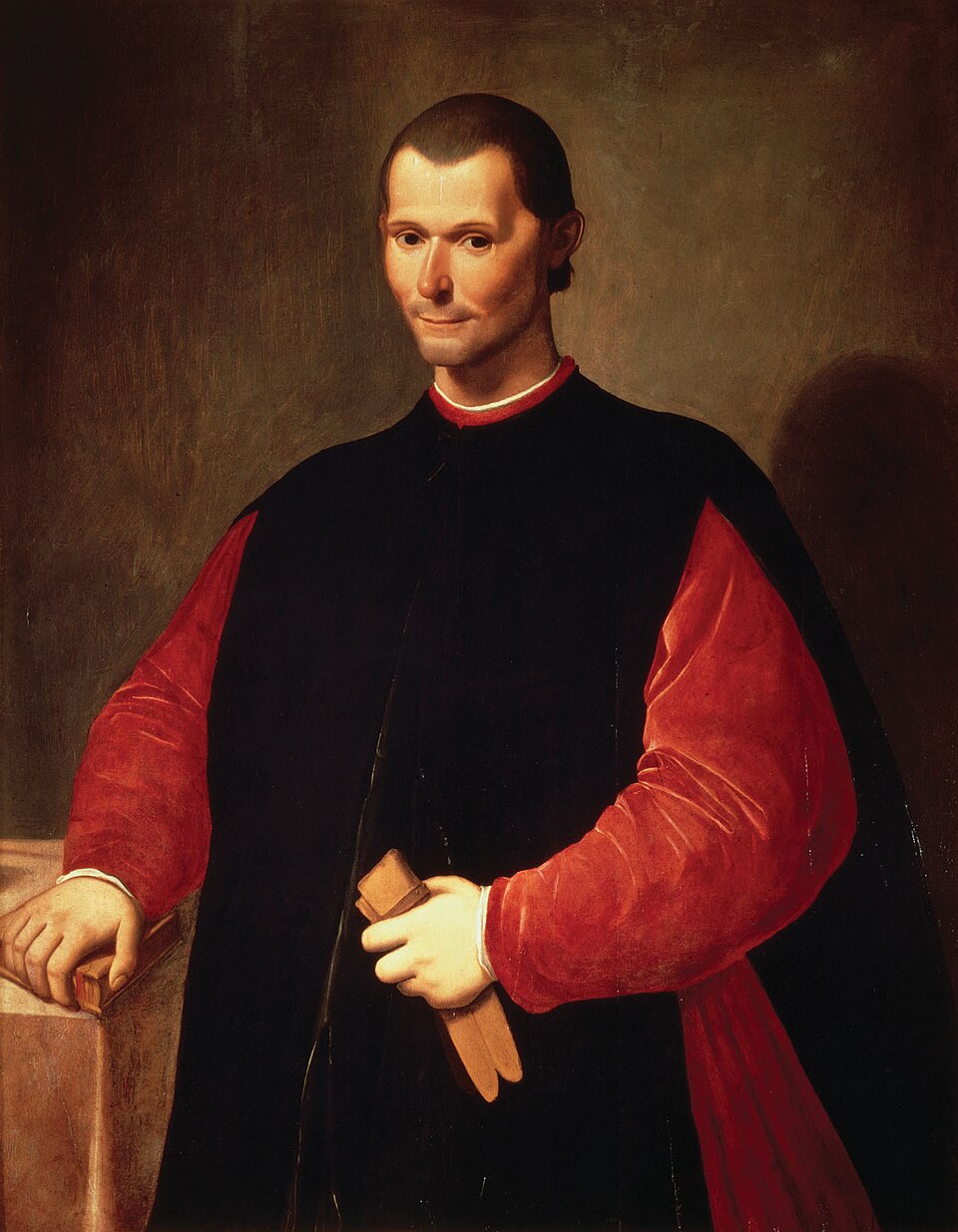
The scene is simple, which is why it is instructive. The American president asks the president of South Korea to "give us a little hand" in what he calls the denuclearization of Iran. The answer is “No thanks.” At the same time, this American demands that joint military exercises on the Korean peninsula be scaled back. South Korea’s Defense Ministry replies in deeds, not words: the exercises begin Monday as planned. Then comes the lash: the president tells his people the war games are unnecessarily provocative, a challenge to Kim Jong Un, though his own administration has only recently praised South Korea. So in one episode we have the request, the refusal, the demand, the defiance, and the public rebuke.
When I wrote in The Prince that one must look to the effectual truth and not to imagined republics, I meant exactly this kind of moment. The imagination says “allies,” and sees obedient auxiliaries moving when the prince calls. The truth shows two states, each calculating its own security. South Korea maintains “close coordination” on joint training because its survival sits under North Korean guns; it says no to an Iran adventure because that does not appear necessary to its safety. The rule is old: friends in name become mercenaries and auxiliaries in fact whenever their own dangers and yours do not align. They obey their pay, not your command.
A prudent prince, knowing this, does not confuse alliance with ownership. In my day, Italian rulers who relied on mercenaries discovered, to their sorrow, that hired lances grow reluctant when the fighting touches their own villages or their own accounts. The Romans, by contrast, made allies by giving them a share in victories and a stake in defeats; they bound them with roads, colonies, and citizenship so that to abandon Rome was to abandon themselves. Here, the American president treats South Korea more like a hireling than a partner, expecting a favor over Iran as if it were a matter of courtesy, not of life and death. When he receives a polite refusal, he answers with public irritation, not with new incentives or new guarantees.
This exposes a deeper error about appearances. In The Prince, as translated by W. K. Marriott, I noted that men judge more with their eyes than with their hands, and that the many see what you seem while the few know what you are. An alliance is above all a spectacle: exercises, visits, statements of “close coordination” are theater that tells friends and enemies who stands where. When the American president calls those very exercises “unnecessarily provocative,” he strikes at his own stage set. He signals to North Korea that he doubts the wisdom of his own posture, and to South Korea that yesterday’s praise can become today’s scolding. A prince who confuses his allies on camera confuses his subjects at home.
Some will answer that harsh words display strength, that fear disciplines unruly partners. There is truth in this, but only under one condition: the threat must be believed and the command must be obeyed. Otherwise the prince has chosen the worst middle course, which I have always despised. Here, the war games proceed exactly as South Korea planned. The demand to scale them back has no effect; the refusal to help on Iran stands. What remains is only the noise of anger. Fear without follow‑through breeds contempt, and love poisoned by insult breeds resentment. Between contemptuous friends and resentful ones, a ruler has no real arms, only fair‑weather auxiliaries.
Consider also virtù and fortuna. Fortune here takes the form of simultaneous storms: confrontation with Iran, tension with North Korea, and the need to keep oil flowing through distant straits where yet another partner, Oman, plays mediator. No prince controls these currents. But he does control his dykes and barriers: the habits of consultation with allies, the quiet construction of coalitions, the discipline to keep quarrels inside the council chamber until outcomes are secured. I compared fortune to a flood; a wise ruler, as Marriott’s translation has it, raises banks and defences in calm seasons so the waters have no place to spread. To advertise disputes with one ally while hinting at bombing another is not dyke‑building; it is cutting channels for the flood to run faster.
If the American seeks the denuclearization of Iran, that policy is a kind of reform in the regional order, and like all reforms it requires arms of its own. In my time these arms were citizen soldiers; today they are naval bases, air corridors, sanctions regimes, and the quiet assent of partners who control straits and frontiers. By threatening Oman and lashing out at South Korea, the president spends the currency of reputation and loyalty that makes such arms move. He does not compel obedience; he merely reveals limits. The effectual truth is plain: a prince who burns his own bridges in public discovers, when he turns to cross them, that he must march alone.
From the works cited
- The Prince — Arms of one's own versus mercenaries and auxiliaries: power borrowed is power owed, and it will be collected at the worst moment.
- The Prince — Appearances are a hard currency of power: most people judge by the eyes rather than the hands, by results rather than processes.
- The Prince — Fortune is arbiter of roughly half of events; virtù — foresight, boldness, preparation — governs the rest.