US Launches Economic Campaign Against Iran Following JCPOA Withdrawal
Economic D-Day and the Great Chess-Board of Human Society
America’s campaign of sanctions and blockade against Iran dresses itself in the language of peace, but it works by shattering markets, taxing innocents, and flattering the ambitions of the powerful at other people’s expense.
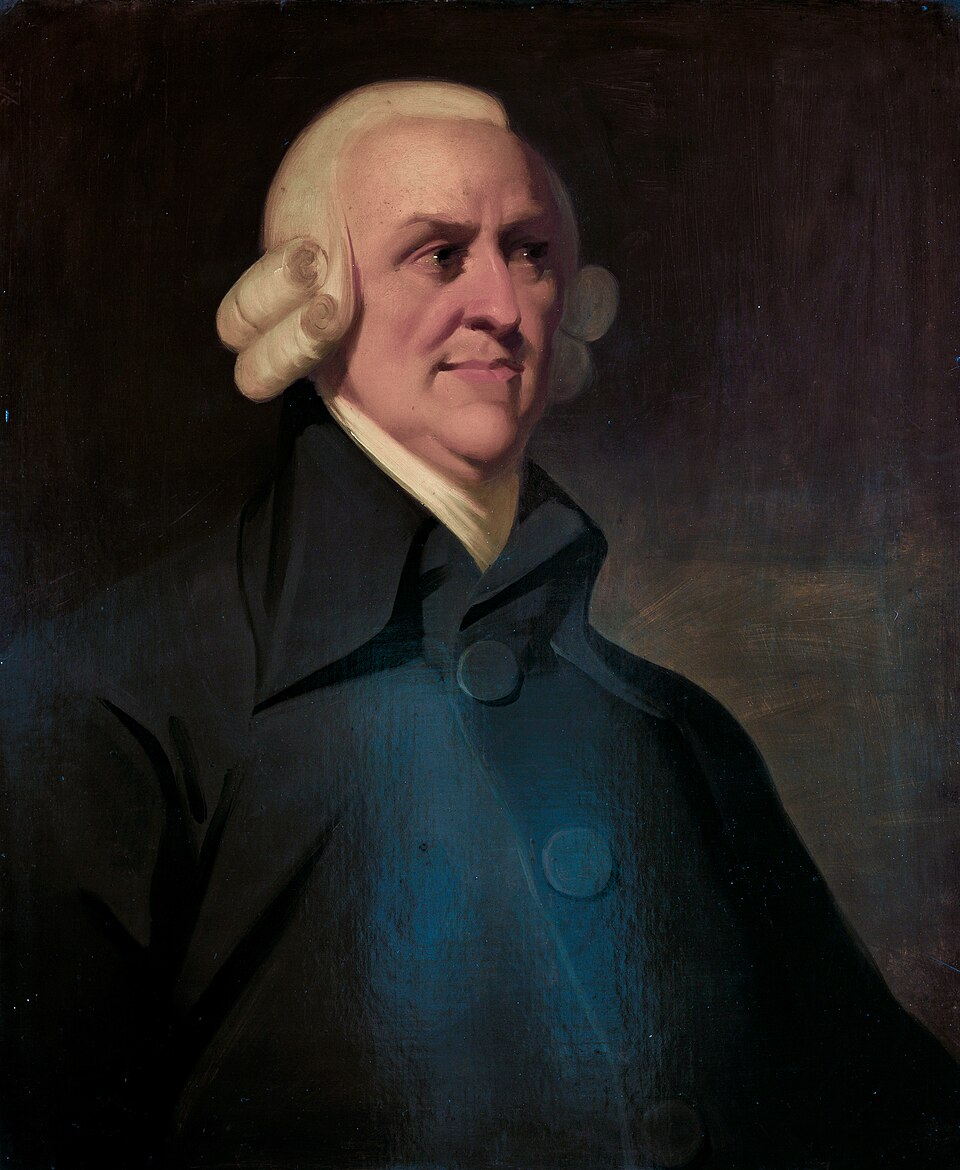
When a statesman threatens an “economic D-Day” rather than a military one, he invites us to admire his moderation. Cannons are silent, fleets do not yet fire, and we are told that, by closing ports and hunting bank transfers instead of ships, he signals that he does not wish to return to war. Operation Economic Fury, we learn, joins a naval blockade of Iranian ports to a tightening of financial sanctions, all under the banner of avoiding bloodshed. It is a tempting rhetoric; every age prefers to believe that its violence is humane, its coercion enlightened, its wars so economical that they scarcely count as wars at all.
Yet in political economy, as in morality, one must look not merely to the avowed intention, but to the means employed and to the persons made to bear the cost. In my inquiry into the wealth of nations, I observed that the division of labour, that humble pin-factory principle, is limited by the extent of the market. Whatever narrows that market lowers the power of each workman’s skill, and therefore the annual produce of the land and labour of the country. A naval blockade does not reason with a government; it interrupts the higgling and bargaining of innumerable traders. Sanctions upon “regime financial flows” do not fall solely on ministers; they fall, through altered prices and broken contracts, upon butchers, brewers, and bakers who have never seen a treaty.
The partisans of such measures point to their visible effects. They promise to “expand the economic blast radius,” to frighten not only the immediate enemy but third countries whose commerce is entangled with his, and who depend upon access to the dominant currency. The damage that can be named is proudly counted: ships turned back, transactions frozen, a rival’s public revenues curtailed. The benefits that can be proclaimed are even more readily displayed: we are, it is said, applying pressure instead of launching missiles, we are using Treasury rather than artillery. But prices altered in a distant bazaar, employments quietly extinguished in an allied port, medicines that do not arrive because a banker fears a sanction—these leave no triumphant communiqués, though they are as real as any explosion.
In such cases, the impartial spectator, of whom I spoke in my Theory of Moral Sentiments, must ask whether this manner of acting is praise-worthy, or only praised by those who profit from it. To use the necessary powers of defence in order to prevent war may be a duty of government; to employ those powers in a manner that deliberately widens an “economic blast radius” so as to alarm neutrals and dependents is something different. If one man, to punish his enemy, were to cut off a whole street from its food and fuel, we should not think better of him because he professed to abhor bloodshed. When the same is contrived by fleets and financial offices, it alters the scale but not the species of the action.
We must also remember that men in authority are subject to the same passions as the poor man’s son, whose restless ambition I once described. He imagines that, by surrounding himself with grandeur and command, he will at last enjoy repose; instead he purchases, by a life of anxiety, a disappointment which he might have foreseen. So too a great power, intoxicated with its capacity to move markets and blockade ports, persuades itself that there is glory and security in being able to impoverish another at a distance. It overvalues the splendour of this domination, and undervalues both the resentment it breeds abroad and the habits of arrogance it fosters at home. Power over other people’s bread seldom produces the tranquillity it promises.
In all of this, we must be on our guard not only against the vanity of statesmen, but against the subtler conspiracies of merchants and financiers who attend them. People of the same trade seldom meet, even with patriotic ministers, without contriving something to their own advantage. Some will discover that sanctions conveniently disable competitors under the guise of virtue; others, that policing the blockade or navigating its exemptions yields pleasant profits. Those who suffer most—the labouring poor in the targeted country, the small traders in third nations whose dealings now risk punishment—possess neither lobby nor newspaper. When policy is made in their name but without their voice, the invisible hand which sometimes turns private interest to public benefit is more likely to be cuffed away than gently guiding.
A wise nation, therefore, will treat “economic warfare” as it ought to treat military warfare: sometimes necessary for defence, always dangerous to liberty and opulence, and never to be entered upon from passion, vanity, or the prejudices of a particular faction. It will measure its blockades and sanctions as a surgeon measures his incisions, seeking the narrowest cut that can answer the purpose, and ceasing as soon as that purpose is served. Above all, it will remember that the great chess-board of human society is not moved by the hand of the Treasury alone; each piece has a principle of motion of its own, and may not consent to be sacrificed for the pleasure of seeing an enemy checked from across the sea.
From the works cited
- An Inquiry into the Nature and Causes of the Wealth of Nations — The division of labour (the pin factory) as the engine of opulence, limited by the extent of the market.
- An Inquiry into the Nature and Causes of the Wealth of Nations — The sovereign's three duties (defence, justice, public works and institutions) and the four maxims of taxation.
- The Theory of Moral Sentiments — Judge conduct by the impartial spectator: what would a well-informed, disinterested observer feel about this action?