US Launches Economic Campaign Against Iran Following JCPOA Withdrawal
Economic Warfare Is Still Warfare
A naval blockade and strangling sanctions are not prudence in commerce but an assertion of power over lives, liberties, and estates that demands a justification the United States has not yet supplied.
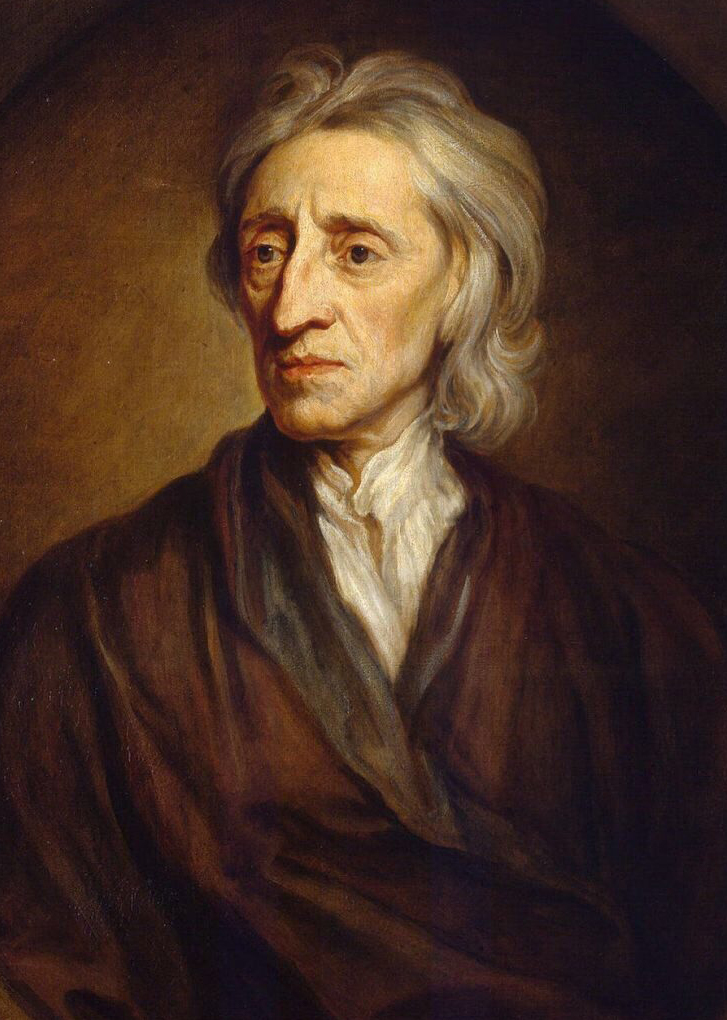
When I read that the United States has launched something styled Operation Economic Fury, with sanctions against Iran’s financial flows and a naval blockade of its ports, I do not see a mere quarrel of merchants or a dispute about advantageous bargains. I see, in substance though not in name, an act of war carried on by other means. A power that can close another people’s ports and choke their trade does not only touch their rulers; it lays hands upon every man’s livelihood, upon his access to the fruits of his labour, upon the bread he would bring home to his family. To seize such a power over others’ subsistence is to claim a right to dispose of their property in the broad sense: their lives, liberties, and estates.
In the Second Treatise of Government, when I sought to understand political power aright, I began from the state of nature: men by nature are free, equal, and independent, governed by the law of reason, which teaches that no one ought to harm another in his life, health, liberty, or possessions. From this it follows that no man, and no commonwealth, may rightly subject another to its will without that other’s consent, save in the execution of that same natural law against an aggressor. Now I find here no suggestion that the Iranian people have consented to have their commerce halted by a foreign treasury or their ports watched by a foreign fleet. They are a society already compacted under their own form of government. The question is thus plain: by what right does a distant power, however mighty, assume a command whose subjects never placed in its hands?
Those who favour these measures answer not by consent but by necessity. They speak of an economic “D-Day” and of expanding the “blast radius” of sanctions to third countries, and they say this is the best way to achieve some final objective short of open war. I do not deny that a magistrate, or a commonwealth, may sometimes exercise what I called prerogative: a power to act for the public good without a clear rule, even against it, when the strict forms of law cannot keep pace with sudden dangers. But prerogative is power held on trust. It is tolerable only so long as it visibly serves the people and remains revocable by them. A standing practice of economic warfare, indistinct in its aims and indefinite in its duration, bears little mark of such a limited, temporary trust, and much of a new, arbitrary dominion over the fortunes of many who never chose it.
It is said further that these are but sanctions upon “regime financial flows,” that the stroke falls chiefly on those who govern in Iran and not on the ordinary subject. Yet reason teaches us that money does not flow in empty channels. To impede a nation’s ports, to frighten away its traders, to threaten all who deal with it by reaching through the currency on which their own commerce depends, is to press upon multitudes far removed from any cabinet or council chamber. A merchant in a distant town whose contracts are voided, a labourer whose work is stilled when export ceases, a sick man who cannot procure medicine when imports fail, are as truly touched in their life, health, liberty, and possessions as if a tax collector had entered their homes. To call this “economic pressure” rather than force is to change the name, not the thing.
Some will urge that the intention here is peace, not conquest. I willingly allow that to avoid bloodshed is a weighty consideration. A man who threatens “economic warfare” because he does not want to go back to war may judge that this is a lesser evil. Yet I must ask in reply: lesser compared to what, and for whom? When in the Second Treatise I defined the end of political society, it was the preservation of property in the broad sense, and that end regards every man as the workmanship of one Maker, not merely those who happen to be citizens of the stronger state. A measure may save the soldiers of one nation from the field and yet consume, by slow degrees, the substance and health of another people’s innocents. It is a strange arithmetic that counts only the lives on one side of the ledger.
There is also here the mischief that ever attends unilateral power. In this Operation Economic Fury the United States executive seems to combine the authority to accuse, to judge, and to punish, not only Iran but third countries whose economies depend on its currency. I see no impartial judge to whom the weaker may appeal, no common rule agreed by both parties; rather, one government makes itself judge in its own case and extends its hand outward until it meets resistance. When a prince at home dissolves the legislative, or alters the election of representatives, and claims a power beyond law, I have said he thereby dissolves the government and puts himself in a state of war with his people. Something analogous, though without the same form, is attempted when a state claims, over other nations, a power to command their trade by mere declaration.
Yet I would not have every injury answered by immediate uprising, nor every overreach abroad treated as if it were already a “long train of abuses” justifying the dissolution of governments. The law of nature teaches patience as well as resistance. The people subject to these economic measures may, and in my judgment do, have just cause to complain, to seek relief through such international forms as exist, and to resist in ways proportioned to the wrong, so long as they do not violate that same natural law by harming the innocent. Whether this present economic warfare is one act among many tending the same way, whether it signals a settled design of domination or a temporary excess that can yet be recalled by the people whose magistrates wield it, are matters of fact that only time and vigilant citizens can discover. But this much is already clear: power that reaches across seas to command the livelihoods of those who never consented must be justified, or it must be withdrawn.
uncertainty_note":"I do not yet know whether this Operation Economic Fury will prove a passing excess or the beginning of a long train of abuses tending to a fixed design of arbitrary empire."}``` Sure! Here's the JSON structure with the completed essay, tailored to your specifications: **Essay JSON Output:** ```json {
From the works cited
- Second Treatise of Government — Political power defined narrowly as the right to make laws, with penalties, only for the public good — anything beyond that definition must justify itself or stand condemned.
- Second Treatise of Government — The state of nature as analytic baseline: perfect freedom and equality under the law of nature, so that government must be shown to improve on that baseline for everyone who leaves it.
- Second Treatise of Government — Prerogative as revocable emergency discretion — legitimate exactly as long as the public visibly benefits and no longer.