US Imposes 50% Tariffs on Canadian Goods After Trade Talks Collapse
A Tariff War Among Friends Is Still a War on Their Poor
Fifty‑percent duties between neighbouring allies punish consumers, shrink the market that enriches them, and reward the loudest interests at the quiet multitude’s expense.
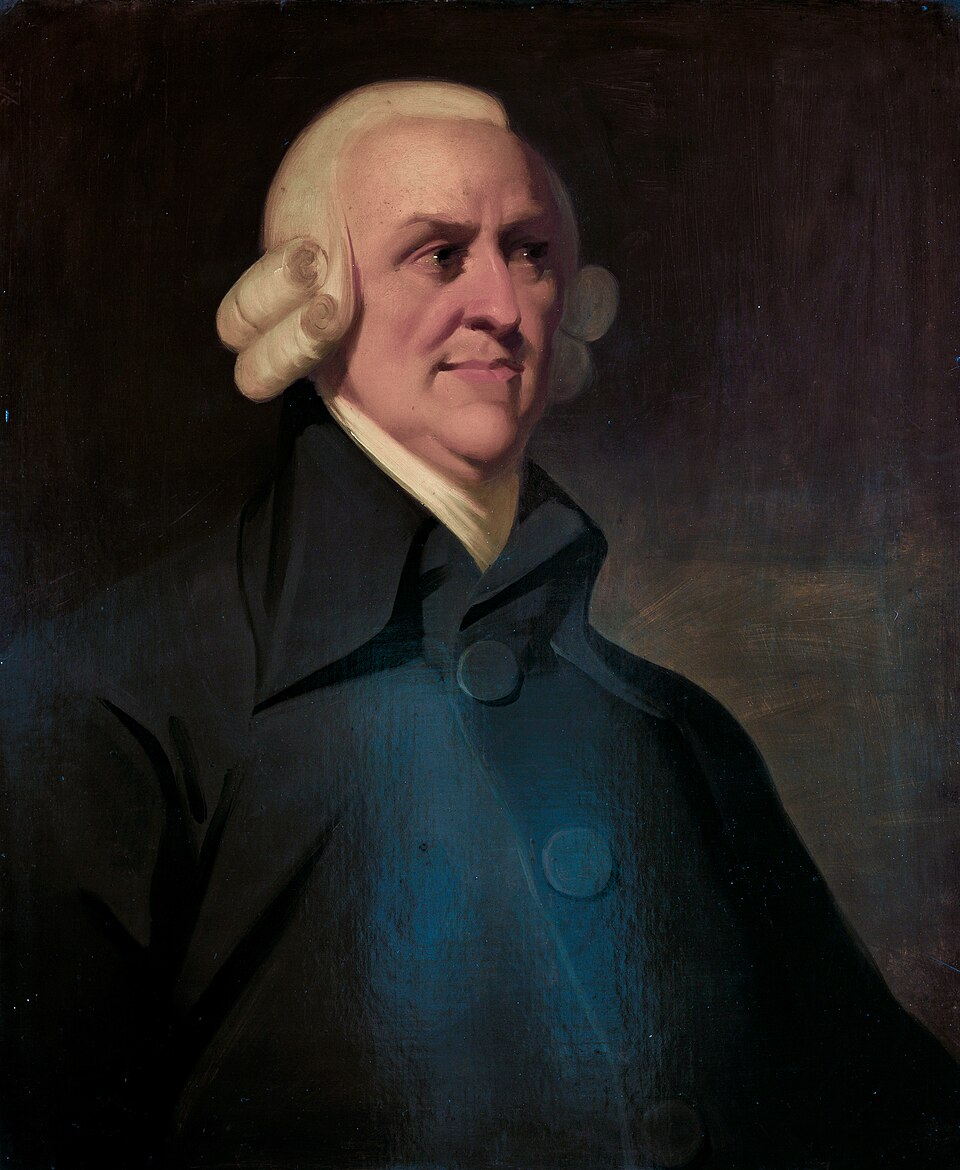
Let us begin, not with constitutions or flags, but with a tongue depressor. Yesterday it crossed a river between two long‑allied nations as a simple article of commerce; to‑day it is loaded with a fifty‑per‑cent duty. The same fate now attends hockey sticks, cement, honey, perfumes, furniture, cameras, even the little metal ornaments that decorate your shelves. One government has reached back to a law of the great depression to tax roughly twenty billions of its neighbour’s goods; the other has vowed to answer, “dollar for dollar”, on steel, dairy, appliances, agricultural equipment, pulp and paper, and electronics. Statesmen speak of defending workers and restoring balance. The invoice that follows will be sent, in silence, to their consumers.
When I wrote of the pin‑factory in my Inquiry into the Nature and Causes of the Wealth of Nations, my point was not that pins are interesting, but that the division of labour is powerful, and that its power is everywhere limited by the extent of the market. Two great continental neighbours had, by patient higgling and bargaining, opened a vast common market in which one side might excel in dairy and cement, the other in machinery and electronics, and both in a hundred intermediate trades. Every new bridge and agreement widened that market, deepened specialisation, and raised the annual produce of the land and labour on each shore. To interpose a wall of fifty‑per‑cent duties across such a market is to narrow it at a stroke; to answer with a second wall is to narrow it twice.
The first and plainest effect of such duties is on prices. A tax upon imported dairy or furniture is not paid, in the end, by the foreign cow or the foreign chair; it is paid by the domestic buyer, whether householder or manufacturer, who must now either pay dearer or forego the purchase altogether. The protected domestic producer gains a visible advantage; the tariff is announced at a podium, the factory visit is photographed, the “saved” jobs are counted. The dispersed multitude who pay slightly more for their groceries, their appliances, their building materials, their tools of trade, are never assembled in one hall, and therefore never heard. In trade policy, the loud interest is usually the smallest; the silent interest is commonly the largest.
It is said that farmers on one side have long faced “massive” foreign tariffs, and that the new measures merely restore reciprocity. Perhaps some of those complaints are just; perhaps some foreign measures were indeed partial and ought to be amended. But as I argued in the Wealth of Nations, every proposal of a new regulation of commerce that comes from those whose interest is to profit by it ought to be received with the most suspicious attention, and ought never to be adopted till after the most careful examination. Merchants and manufacturers are not worse men than their neighbours; they are only placed in a situation in which narrowing competition is constantly to their advantage. When the remedy for one injustice conveniently enlarges their protection at a neighbour’s expense, the impartial spectator will examine motives as well as pretexts.
The retaliatory duties announced by the other government follow the same unhappy logic. No minister can allow himself to seem passive when his neighbour unsheathes a weapon; honour, pride, and the clamour of affected industries all urge an answer “dollar for dollar”. Yet retaliation, though it gratifies the spirit of the moment, seldom compensates for the original injury. It adds a second tax to the first, inflicts new losses on domestic workers who sell into the other market, and invites further escalation. Trade experts already warn of job losses; the largest effect, they say, may be political, widening the breach between long‑standing allies. In commercial war, as in other kinds, the labouring poor are always placed in the front line and the last consulted.
In The Theory of Moral Sentiments I asked by what standard we might judge the propriety of our own conduct, and I answered: by placing ourselves in the situation of an impartial spectator, well informed, yet personally unconcerned. That spectator, contemplating this quarrel between friends, would note that both sides profess to protect “our workers and businesses”, yet both deliberately raise the cost of life’s necessaries and conveniencies to their own people. He would see complex prior negotiations, mutual accusations of bad faith, and many technicalities of bridges, steel, lumber, and the like, but he would also observe that no one speaks for the young couple who must now pay more for cement, for furniture, for the household appliances that lighten their labour. That couple’s welfare is the true measure of a nation’s opulence, not the temporary triumphs of its customs‑houses.
I have never denied that the state has duties which no private undertaker can perform: defence, the exact administration of justice, certain public works and institutions. But to load particular branches of trade with extraordinary burdens, in order to favour others, is a very different employment of authority. Here the legislator ceases to be the umpire and becomes himself a player, moving the pieces on the great chess‑board of human society according to a system of his own, rather than leaving them to find their place through the mutual adjustment of prices, wages, profit, and rent. A tariff war among friends is therefore not an assertion of sovereignty; it is an abdication of prudence, by which each side injures its own people in order to appear resolute to the other.
From the works cited
- An Inquiry into the Nature and Causes of the Wealth of Nations — The division of labour (the pin factory) as the engine of opulence, limited by the extent of the market.
- An Inquiry into the Nature and Causes of the Wealth of Nations — Trace every policy to its effect on prices, wages, and entry, and name the invisible loser — the consumer, the outsider, the would-be competitor who never appears at the hearing.
- The Theory of Moral Sentiments — Judge conduct by the impartial spectator: what would a well-informed, disinterested observer feel about this action?