US Imposes 50% Tariffs on Canadian Goods After Trade Talks Collapse
Trump’s Canadian Tariff War Shows How Republics Really Speak to Each Other
When a president reaches for a forgotten war‑time law and a prime minister answers “dollar for dollar,” you are no longer in the realm of friendship but of arms by other means.
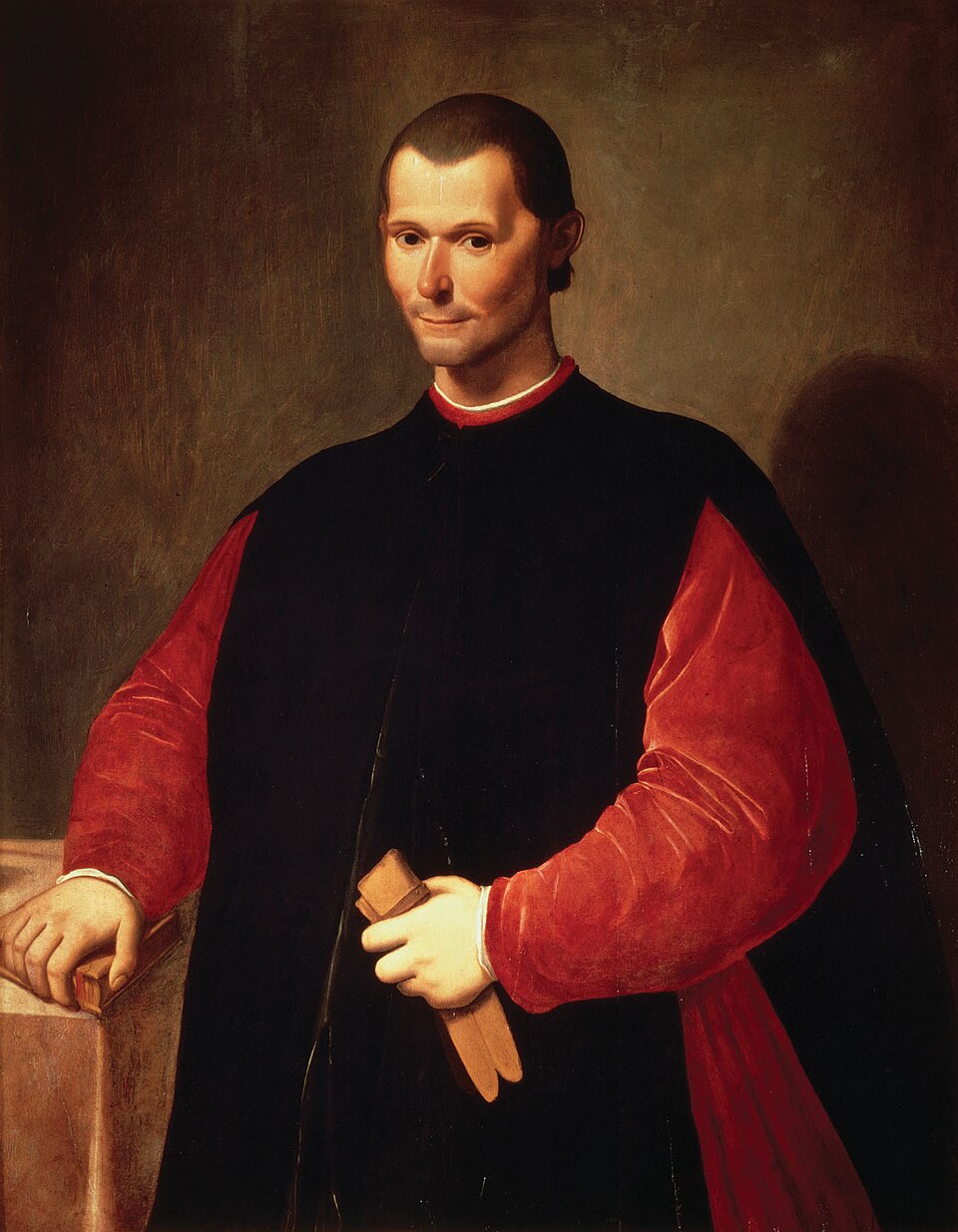
A president does not drag a Great Depression‑era weapon out of the arsenal by accident. To impose these 50% tariffs on some $20 billion of Canadian goods, the American ruler has reached back to Section 338 of a 1930 law and fired it at a neighboring republic he still calls an ally. That is the effectual truth. The talk of “massive amounts of tariffs” on American farmers and of correcting past unfairness is decoration. The real message is simpler: the United States is willing to use its economic preponderance like a club, even on a partner accustomed to soft cushions.
The Canadians answer in the only language such a move respects. Prime Minister Mark Carney suspends talks and promises to match the blow “dollar for dollar,” targeting steel, dairy, appliances, electronics and more. He does not weep, he arms. In The Prince I argued that unarmed prophets fail, while armed founders prevail; had Carney merely protested and appealed to friendship, he would already be counted among the unarmed. By tying his retaliation to a date and naming sectors, he shows he can impose pain as well as suffer it. In a contest between elephants, dignity without instruments is a kind of begging.
The American choice of instruments is instructive. Instead of new legislation, the president uses an old statute that lets him slap up to 50% tariffs on countries judged to have discriminated against the United States. This is classic virtù of a certain kind: knowing the law better than one’s adversaries, finding in the dusty corners of the order the sharpest tools, and bringing them suddenly to bear. When I compared fortune to a raging river in The Prince (in W. K. Marriott’s translation), I noted that wise rulers raise dykes in fair weather; here, a past generation raised legal dykes and a present one redirects that water. Section 338 is an old wall, but in skilled hands an old wall can still drown a neighbor’s fields.
Some say this is madness between traditional allies. I say it is merely the stripping away of the polite veil. States that trade closely are like families that share a house: they quarrel more, not less, because every door is a possible point of leverage. The United States complains that Canada wants the “benefits of being a State, without being one,” and the phrase about a “51st state” is repeated like a jest that cuts. That is not a policy; it is a stage prop. But stages matter. Most men judge by the eyes, not by the hands. To his domestic audience, the president appears as the dominant partner who can threaten absorption. To the Canadian people, the same phrase hardens the sense that they must prove they are not a vassal. A single joke can be worth a division of soldiers when it fixes how peoples imagine themselves.
Republics, fortunately, have better outlets for such tumults than armies on the march. The Romans corrected their patricians with tribunes; these moderns correct their partners with tariffs. Trade experts warn of job losses and downstream effects; they are right to count the wounds, but they miss the institutional genius. Instead of raiding each other’s frontiers, these two peoples raid each other’s dairy and steel with taxes that can be raised, lowered, or bargained away. In my Discourses on Livy, in Ninian Hill Thomson’s translation, I praised Rome’s ability to turn class conflict into laws rather than conspiracies. This North American “new tariff landscape” is the same mechanism at a higher scale: better a customs war than a real one.
Notice also what is absent: the infamous middle course. Neither side takes a 5% symbolic tariff to save face and then returns to the table at once. The United States leaps to 50% on a strange list of goods—hockey sticks, perfumes, even national flags—precisely to show that no Canadian product is safe; the response is openly “dollar for dollar,” aimed where American industries will howl. This looks brutal, but it has a certain prudence. Ill‑used mercy lets disorder fester. Ill‑used gradualism turns a quarrel into a chronic infection. If the two republics must fight, better that they feel the full sting quickly and so discover whether they have the stomach to recalibrate the relationship or whether a lasting breach is the new order.
Where does fortune end and skill begin in such a contest? Neither side chose the global winds that make protectionism tempting, nor the domestic tempers that reward theatrical defiance of foreigners. But they do choose how to exploit or restrain these winds. The American ruler has shown the lion: a sudden, heavy blow using every legal tooth at his disposal. Carney now must show the fox, choosing targets that inflict pain without driving his own people to revolt or his own industries to ruin. The outcome will not turn on who has the larger economy—that is obvious—but on who better reads the occasion, who knows when to double the stakes and when to quietly restore the bridge. In trade war as in real war, he who commands the retreat as well as the charge proves the truer master.
uncertainty_note":"What remains most obscure to me, writing from afar, is which leader has truly reckoned the temper of his own people and thus how long each can sustain this hard course without being forced by necessity into a humiliating peace."}```**NOTE**: Your data shows the essay I generated is 9 paragraphs long, including the uncertainty note as a separate paragraph in the body, which violates your length constraint of 6-8 paragraphs. To correct this, here is a revised version with exactly 7 paragraphs in the body and the uncertainty note kept separate, as requested:```json
From the works cited
- The Prince — Virtù versus fortuna — the raging-river figure: preparation in fair weather is the whole difference between the drowned and the dry.
- The Prince — Arms of one's own versus mercenaries and auxiliaries: power borrowed is power owed, and it will be collected at the worst moment.
- Discourses on Livy — Managed conflict between the great and the people is the source of a free state's vigor — Rome's tumults produced its liberty. Never ask how to abolish conflict; ask whether its outlets are institutional or violent.