US Imposes 50% Tariffs on Canadian Goods After Trade Talks Collapse
Tariffs Without Consent Are Not Trade but Force
When one nation reaches back to a dormant law to punish another with 50% duties, speaking of it as a wayward “51st state,” it ceases to trade as an equal and begins to rule without right — and resistance is no breach of peace but a defense of it.
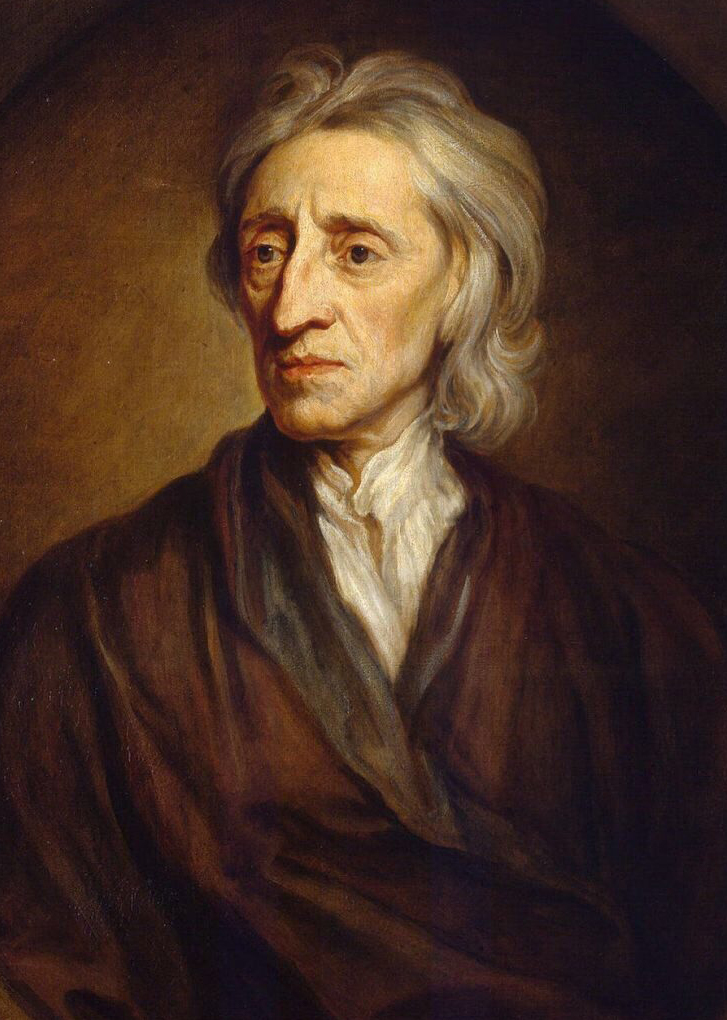
The present quarrel between the United States and Canada turns, in form, upon tariffs, percentages, and lists of goods: dairy and alcoholic drink, cement and hockey sticks, even honey, seeds, perfumes, clothing, and furniture. The United States president has, by invoking Section 338 of a Tariff Act from 1930, laid a 50% burden upon some $20 billion of Canadian products, and has done so the instant negotiations failed. Canada’s prime minister has answered that these charges will be matched “dollar for dollar,” and has suspended the talks. Trade experts warn of lost jobs and political strain; yet beneath these numbers lies a simpler question: by what right does one people so treat another?
When I sought, in the Second Treatise of Government, to understand political power aright, I began with men in a state of nature, where they are free and equal under the law of reason, owing obedience to no will but God’s and their own informed understanding. From that state no one is bound to another’s command, unless he has consented to a common rule for the protection of his life, liberty, and estate. I see here two independent peoples, long allied, bound by prior arrangements, and lately attempting a new agreement. So long as they deal as equals, each may withhold his assent; a failed bargain may be unwise, but it is not unjust. The injustice begins when one side, disappointed, reaches for punishment as if the other were already a subject.
The language reported from Washington makes this plain. The president has repeatedly spoken of making Canada the “51st state,” saying that it seeks the benefits of statehood without the duties. A provincial leader in British Columbia, I read, fears that certain demands would reduce Canada to the “economic equivalent of the 51st state.” But Canada is not a state of that union; it is a separate people with its own legislative. To tax its wares at 50% in retaliation for not accepting terms, and to justify this by talk of state-like obligations, is to assume a superiority which has never been granted. Here the burden of proof lies wholly on power, not on liberty; the United States must show where Canadians consented to be thus treated, or confess that it acts upon bare strength.
It will be said that the United States acts under its own law, that Section 338 permits such tariffs when other countries discriminate against its farmers, whom the president claims have been charged “massive amounts of Tariffs” for years. But as I argued in the Second Treatise (in paraphrase), a bare permission in a statute does not make an action just, unless it be ordered to the public good and bounded by the law of nature, which forbids any to harm another in his life, health, liberty, or possessions. When a government imposes sudden, heavy burdens on the property of foreigners who have broken no law of theirs, but only refused a new bargain, it may comply with its own forms; yet if the effect is to injure their estates merely to bend their will, it walks very near to that arbitrary power which is worse than the state of nature it pretends to correct.
The danger lies not only in the weight of these 50% levies, but in their manner. An executive officer, dissatisfied with the outcome of negotiation, has reached back almost a century to a “long-dormant” law, and by his single discretion altered the conditions of commerce for nearly all industries, from steel and lumber to makeup, cameras, and base metal statuettes. Those affected have no impartial judge between them and this decision; the president is, in effect, judge in his own case, proclaiming that American farmers have long been wronged and then himself measuring out the remedy. If this be accepted as ordinary practice, what is left of a rule of known standing law, by which men may foresee their condition and order their affairs?
I do not deny that there can be a lawful prerogative, a power sometimes to act for the public good where the rule is silent, even contrary to the letter, so long as it is manifestly for the protection of the people and always revocable. But I see here not a temporary indulgence for mutual safety, but a punitive measure timed to a negotiating deadline, accompanied by rhetoric of subordination, and framed as leverage. Canada’s answer — to match tariffs “dollar for dollar,” to concentrate them on chosen American sectors, and to suspend talks — appears, on the facts before me, not as the first move to disorder but as a species of resistance, by which a people signals that it will not be driven into an economic dependence resembling that “51st state” condition others have named and feared.
In my own time I wrote that when legislators invade property or seek to reduce a people under arbitrary power, they put themselves into a state of war with those they govern, who are then discharged from obedience and may appeal to heaven. I do not say that this present tariff quarrel is yet such a “long train of abuses” as to dissolve all bonds between these neighbours; the reports suggest chiefly political damage, not the overthrow of civil society. Yet even in this lesser matter, the principle is the same: power over trade, like power over any civil interest, is held on trust, for the good of all subject to it, and must proceed by consent and known rules, not by surprise punishments resting on antiquated instruments. Where that trust is broken, the injured party does no wrong in withholding further agreements until it is restored.
uncertainty_note":"I write only from the facts reported, which may omit important details of past Canadian measures and of the precise terms on offer, and so my judgment reaches no farther than the justice of invoking a dusty law to punish an equal for refusing them."}```}**
From the works cited
- Second Treatise of Government — Political power defined narrowly as the right to make laws, with penalties, only for the public good — anything beyond that definition must justify itself or stand condemned.
- Second Treatise of Government — The state of nature as analytic baseline: perfect freedom and equality under the law of nature, so that government must be shown to improve on that baseline for everyone who leaves it.
- Second Treatise of Government — Dissolution of government and the right of resistance: when legislators invade property or set up arbitrary power, they rebel against the people, not the people against them.